About Us

Our Story

How This Network Came Together

As recently as 2019, not a single African country had published population-level data on neonatal sepsis.

That is the gap NeoNET Africa exists to close. Sepsis is a leading cause of death in the first 28 days of life, and 98% of newborn deaths happen in low and middle income countries. Yet data on which bacteria are causing these infections, and which antibiotics still work against them, has been largely missing from the continent carrying the heaviest burden. Limited access to microbiology laboratories, strained health infrastructure and fragmented data management all contribute.

The consequences compound. Under-reporting means neonatal sepsis is not prioritised or funded as it should be. Missing resistance data means clinicians cannot choose antibiotics with confidence. Meanwhile global newborn mortality has fallen in every region except sub-Saharan Africa, where over one million newborns still die each year.

NeoNET Africa was established in 2023. In November that year, 55 participants from 13 African countries and the United Kingdom met at Stellenbosch University in Cape Town for an inaugural meeting. They came from neonatology, epidemiology, public health, genomics, bioinformatics and data science.
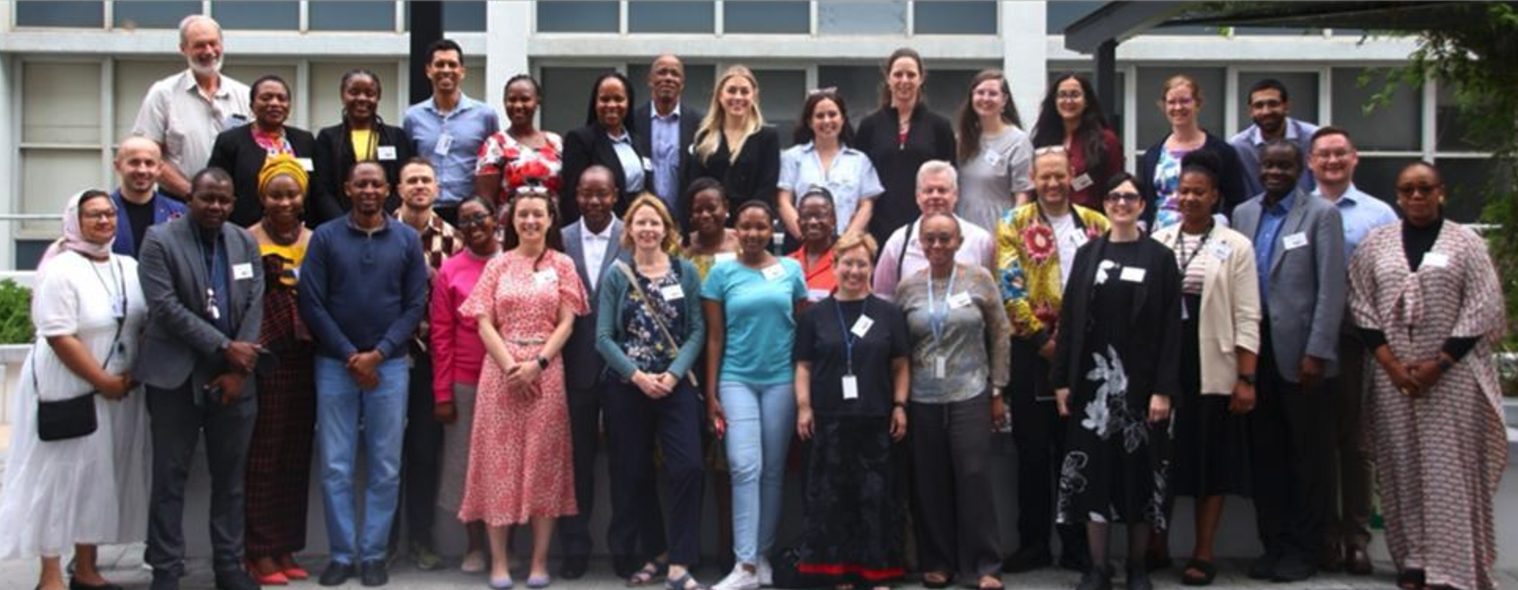
Participants at the inaugural NeoNET Africa meeting, Stellenbosch University, Cape Town, November 2023
Participants at the inaugural NeoNET Africa meeting, Stellenbosch University, Cape Town, November 2023.
Working Together

Partners & Funders

Partners

  • Stellenbosch University, Faculty of Medicine and Health Sciences
  • The Health Research Unit Zimbabwe (THRU-Zim)
  • University of Zimbabwe
  • South African Centre for Epidemiological Modelling and Analysis (SACEMA)
  • Biomedical Research and Training Institute (BRTI)
  • National Health Laboratory Service, Tygerberg Hospital
  • Imperial College London
  • MRC Unit The Gambia at the London School of Hygiene and Tropical Medicine
  • London School of Hygiene and Tropical Medicine, MARCH Centre
  • International Centre for Diarrhoeal Disease Research, Bangladesh
  • Neotree

With support from

  • Wellcome Trust Early Career Award
  • UK Medical Research Council and the UK Department for International Development, under the MRC/DFID Concordat, and the EDCTP2 programme supported by the EU
  • South African Department of Science and Innovation and the National Research Foundation
  • NIH Fogarty Emerging Global Leader Award
NEONET AFRICA

Our Objectives & Focus Areas

Objectives

  1. Understand the epidemiology and pathogenesis of neonatal pathogens.
  2. Consolidate a library of datasets for research.
  3. Support emerging researchers and clinicians.
  4. Address key research questions and develop locally driven research.

Four Primary Areas of Focus

  1. Collect and manage bacterial isolates effectively.
  2. Enable effective data sharing.
  3. Develop local capacity and training opportunities.
  4. Establish research priorities for maternal and neonatal infection.